
Barcode Scanning Software Performance
Creating the best barcode scanner for smart devices.





When you're scanning at scale, lost seconds and wrong scans mean data you can't trust and revenue lost
0%
Near-zero accidental scans
>99%
Accuracy rate consistently >99% for the conditions and codes most apps target
1.4X
1.4X median scan distance than the leading competitor
Dive deep into performance
The Scandit Product Engineering team uses an extensive suite of tests to measure scan performance on a wide range of devices and reflect real use cases in data capture. They support customers daily in executing performance testing, from setting up environments to making development recommendations based on the results.


Raw performance is just the start
To accurately assess barcode scanning performance, use-case-based testing approach. Having actual users test the software in real environments ensures that testing conditions mirror the scenarios they will encounter. This test gives an example of how Scandit product engineers conduct use-case-based testing but we would always recommend that you test in your own environment.

Scandit was 1.2X faster in fashion receiving tests
Why this matters: Faster receiving frees up labor time for other tasks.
It took a human an average of 25.8 seconds to scan 10 plastic-wrapped shirts using Scandit, compared to 30.8 seconds using the leading competitor.
This means that in 1 minute, Scandit would scan an average of 23 items and the leading competitor would scan an average of 19 items.
AI-Powered Barcode Scanning
Scandit's high performance is driven by patented AI-powered barcode scanning features
Demo: Classic versus AI-powered barcode scanning
Traditional scanners trigger on any code in view, forcing workers to bend, cover nearby labels with a finger, or retype values from damaged barcodes. The Scandit AI Engine reads context and user intent in real time, so the right barcode is captured the first time.
Whatever code you depend on, we scan it

ArUco

Aztec Code
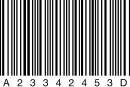
Codabar

Code 11

Code 128

Code 25

CODE 32 Italian Pharmacode

Code 39

Code 93

Data Matrix

DotCode

EAN Code

GS1 Composite Codes

GS1 Databar

IATA 2 of 5

Interleaved 2 of 5 (ITF)

KIX

Matrix 2 of 5

Maxicode

Micro QR Code

MICROPDF417

MSI Plessey

PDF417 Barcode

Posi LAPA 4 State Code

QR Code

Rectangular Micro QR Code

RM4SCC

UPC Code

UPU S18 4-State

USPS Intelligent Mail
The impact of Scandit's performance on business metrics


For more than seven years, Scandit has been a key partner in bringing our vision to life, helping us grow Yuka and expand our user base across the globe and into new continents. Its Smart Data Capture capabilities remain unparalleled, meeting all our needs and most importantly all our users’ needs.
Julie Chapon, co-founder of Yuka


Scandit’s barcode reader technology recognizes barcodes from any angle. The engine achieves a consistently high level of performance even under adverse conditions, such as poor lighting and light reflections.
Jörg Decker, Product Owner for Mobile Commerce at METRONOM


It’s impossible to complete the processes needed during train maintenance without the high-performance scanning features we get from Scandit.
Michael Hildbrand, Infrastructure, Business Development Operations, SBB


To provide a seamless order experience when customers purchase products through our digital channels is key to our e-commerce strategy. Upon replacing the open source scanner with Scandit’s barcode scanner SDK and MatrixScan-AR, we saw a dramatic improvement in scanning speed and increased engagement with our EM app.
Pascal Willi – Head of Digital Commerce, Elektro-Material
Keep reading...

When AI Barcode Scanning Knows It Doesn't Know
New AI-powered barcode scanning features in the Scandit SDK 8.0 make the Scandit AI Engine smart enough to know when NOT to decide…

Barcode Scanning Product Brochure
Comprehensive guide to Scandit's single and multiple barcode scanning software. Performance, technical specifications, security and privacy, integration.

Scandit Announces Renewal of Strategic Relationship with Walmart
Scandit’s advanced barcode scanning software and AR technology helps optimize workflow and operational efficiency for 1.3M associates
Frequently asked questions
Contact usUnmatched Speed
Immediate response is critical for a good user experience – ‘snappy scanning’ is key. Our single scanning speed is 480 scans per minute, reassuringly faster than any human being could cope with.
And to scan multiple barcodes at once, MatrixScan can be used to capture an entire set of barcodes in one sequence (for example, stock counts or labels with many barcodes).
Tough Codes
Our scanner handles tough barcodes that are a problem for most mobile scanning software. No matter if the barcode is torn, has glare or is tiny, our advanced decoding algorithms can handle the toughest conditions.
Wide Angles
Sometimes scanning has to be done in a difficult to access space, such as on an assembly line or behind an appliance at a customer’s premises. Horizontally aligning barcodes can be difficult, but our omnidirectional barcode scanning technology makes it possible to scan barcodes from any angle with ease.
Our extraordinary working range recognizes a barcode anywhere on the screen no matter where it’s placed, either close to or far away from the camera.
Long Distance
Our super resolution barcode scanning software can handle scanning at a distance with ease. The ability to scan normal sized EAN or UPC code at 8 feet distance can come in handy when codes are e.g. located high on a shelf.
Low Light
Users are not always scanning in well lit locations – they might be in a dark stock room or a delivery van or a hospital ward at night. Scandit software consistently performs under these circumstances due to our super resolution scanner.

All Mobile Device Types
When a mobile scanning app is to be used by consumers or by employees with their own devices, it must work on many different device types.
Scandit software supports more than 20,000 models of smart devices – including low-end devices that lack autofocus. We issue regular software updates, for example when a device manufacturer makes a software change that affects scanning functionality.